"We hereby offer the service of our thoughts
and our words to You as a sacrifice.
O Lord, grant us what ought to be offered unto You"
"We hereby offer the service of our thoughts
and our words to You as a sacrifice.
O Lord, grant us what ought to be offered unto You"
Preface
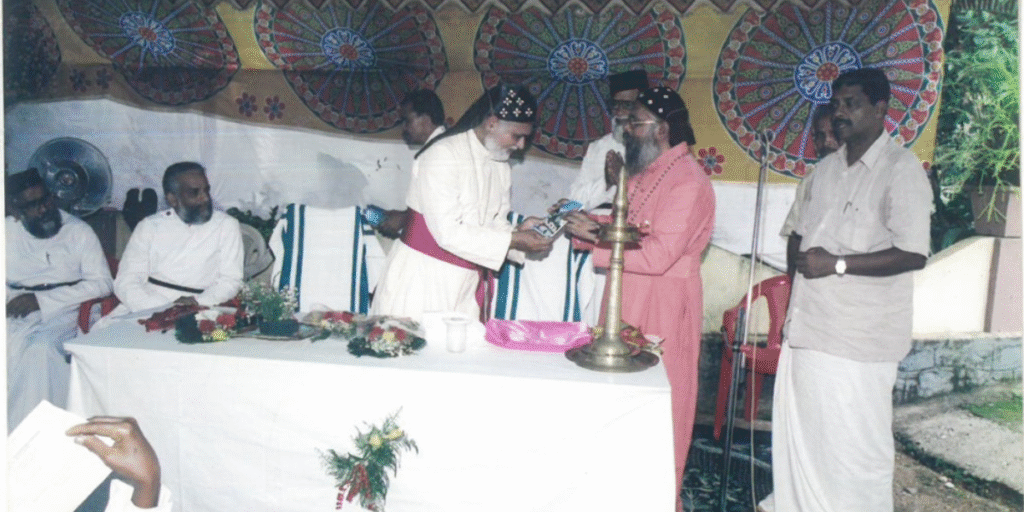
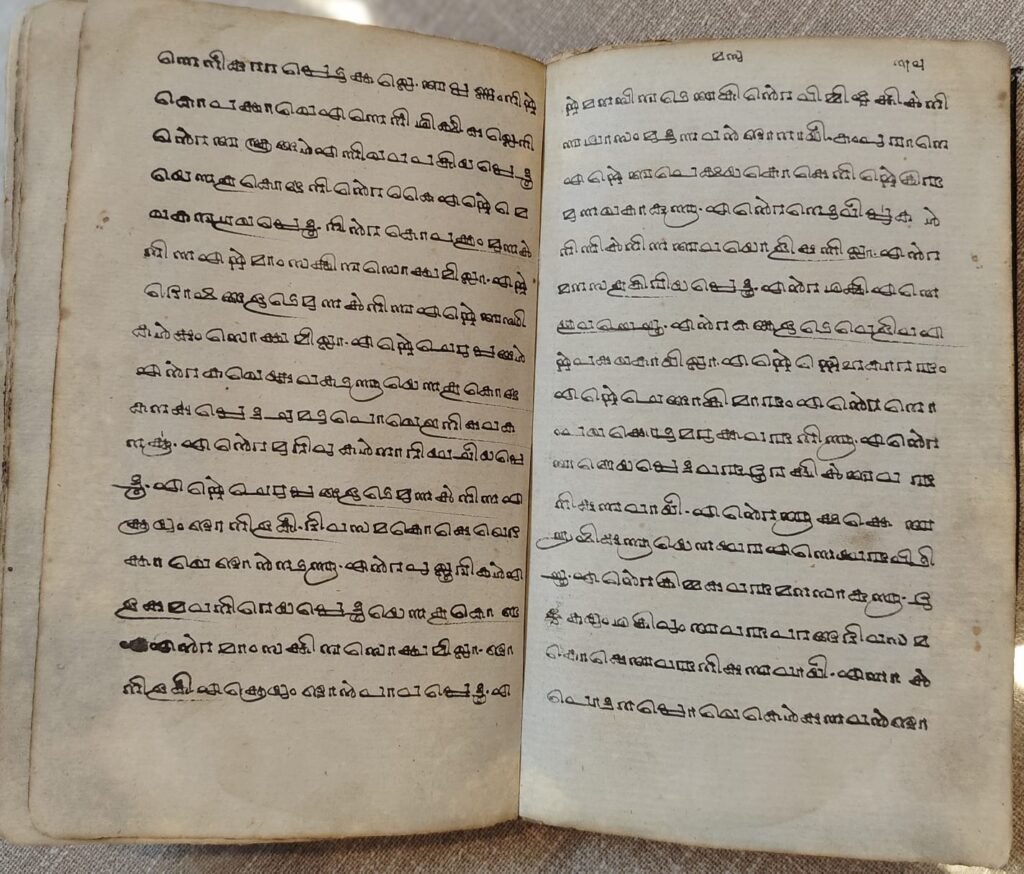
The history titled Mulapponpally Kudumbacharithram-Oru Ethinottam (Mulapponpally Family History – A Brief Overview) was prepared in 2006 based on the comprehensive evaluation of available historical studies, careful analysis of written records, oral narratives, and relevant circumstantial evidences. Rev. Fr. S. Jacob Mulapponpally served as the chief editor of this first print version. Special acknowledgement is accorded to all the editorial board members Joy Koshy Theverethu Kizhakkethil, P. T. Mathews (Painummoottil Peedikayil), Daniel Karrot, Daniel Thuruthel, Sri. K. Georgekutty, Theverethu Kizhakkethil and Adv. Sheena Anns Joy, and all others who contributed in various capacities to bring this family record into reality. The publication was formally released and dedicated on 27 September 2006 (Kanni 11), the Shraddham day, at the residence of Joy Koshy, Theverethu Kizhakkethil. The function was presided by His Grace Yuhanon Mar Chrysostom, Metropolitan of the Malankara Catholic Church, Pathanamthitta Diocese, and was inaugurated by His Grace Gabriel Mar Gregorios, Metropolitan, Malankara Orthodox Church. The occasion was distinguished by the esteemed felicitations of His Grace Geevarghese Mar Osthathios, Senior Metropolitan of the Malankara Orthodox Church, His Grace Joshua Mar Ignathios, Metropolitan of the Malankara Catholic Church, Mavelikkara Diocese, noted historian Dr. Alexander Jacob, IPS, and respected local leader Udayanparambil Sukumara Pillai Sir. In light of the migration of family members across the globe and the need to meaningfully engage the younger generation, it became imperative to adopt digital platforms for the preservation and dissemination of the family history. Accordingly, a concise digital version is made available through the website, named after Kedavilakku. After due deliberation, the website was inaugurated and dedicated on 27 September 2025 (Kanni 11), the Shraddham day, at the residence of Mrs. Rajani Thomas, granddaughter of the late Mulapponpally Jacob Kathanar, at Ezhamkulam. With profound gratitude, I offer praise to the infinitely merciful God for granting the wisdom, strength, and devotion to bring this digital initiative to completion. I also gratefully acknowledge the encouragement and support of the family members and committee members who inspired and guided me throughout this effort. Special gratitude is extended to Raju Daniel Thuruthel (Secretary) and James Varghese Mulapponpally (Trustee) for their steadfast commitment and efficient collaboration. We express gratitude to John Thundil, Babu Varghese Panamthundil, T.V. Mathew Valukuttiyil, Subi Papachan Peedikayil, and Rajan Mozhatt for their timely counsel and assistance. Special gratitude to Mrs. Rosamma Joy, my wife, for her constant encouragement and invaluable support, including the preparation of the handwritten manuscript. I further acknowledge, with gratitude and prayer, the guidance of my daughters and the support of all family members, to whom I express my sincere appreciation and indebtedness.
Migration and the Mulapponpally Family
This digital record “Kedavilakku”, is reverently dedicated in humble remembrance to the founding forefathers of the ancient ancestral home, Mulapponpally Pandarathil, situated in Kudassanad Desam of the erstwhile Thiruvithankot State- to Kathanar Thoma and Kathanar Chacko, who served as a source of spiritual strength in the early centuries; to the blessed memory of Koshy Tharakan Kathanar Appooppan; to the revered descendants Thoma Kathanar and Jacob Tharakan Kathanar; and to all other ancestors, in respectful homage and gratitude.
Family History
Mar Thoma (St. Thomas) one of the twelve Apostles of Jesus Christ, arrived at Kodungallur in AD 52. He initiated his early missionary ministry in and around Palayur village and converted prominent Brahmin families—Kalli, Kalikavu, Pakalomattam, and Sankarapuri—to Christianity. These families were traditionally associated with temple scholarship and priesthood. Subsequently, due to social opposition and religious persecution, these Christian families migrated southward and sought refuge with their relatives connected
to the Ettumanoor Mahadeva Temple. Owing to prevailing resentment towards Christian conversion, they were initially allotted land near Kalikavu, associated with the worship of Bhadrakali. Notwithstanding local apprehensions, the Christian settlers lived there unharmed, which led the temple authorities to formally grant them residential land and record their ancestral family names in official documents. By the early third century, members of the Kalli and Kalikavu families had settled in the area where the Kuravilangad Church now exists. According to tradition, around AD 345, the Blessed Virgin Mary appeared at this site to children tending cattle and directed that a church be built there. In response, a church was established, and the family thereafter came to be known as “Palliveedu” (Church House), derived from their earlier name “Kalliveedu.” Over time, the family expanded, with several branches migrating to different regions in pursuit of livelihood.
Migration and the Mulapponpally Family
As desired by the royal Thekkumkur kings, a group of people, accompanied by Christian priests, migrated southward by inland waterways. After crossing the Pampa, Achankovil and backwaters Karingalipuzha Puncha, they reached Kudassanad, in the vicinity of the Thirumanimangalam Sree Mahadevar Temple. Under the leadership of the revered priests Kathanar Thomma, Kathanar Chacko, and Nasrani Thommy Thomma—they established a family settlement and centre of worship, in memory of “Palliveedu,” which later came to be known as Mulapponpally. During this period, a prevailing Hindu belief was that the oil used in temple worship attained ritual purity only when handled by a Nasrani (Christian). This belief reflects the considerable social respect and recognition accorded to the community in ancient times.
Settlement Records and Lineage
Official land settlement records of the former Thiruvithankot Kingdom, preserved at the Central Survey Office, Thiruvananthapuram (Assistant Director of Survey and Land Records, dated 18 December 1915), record that the revered priests—Kathanar Thomma, Kathanar Chacko, and Nasrani Thommy Thomma—along with their brothers Mathan Vareeth, Kottuviruthi Vadakkeathil, Nasrani Mary Kocheetha, Nasrani Chacko Mathan, and Chacko Chandy, were granted tax-free land (karamozhivu) in Palamel Panchayat of Mavelikkara Taluk, within the historic Travancore State. Earlier land settlement registers dating from 1816 to 1836 also contain references to this family lineage, attesting to the antiquity and continuity of the Mulapponpally heritage. Notably, revenue records list both the Mulapponpally family property and the Thirumanimangalam Temple under the same survey number, indicating their close historical and geographical association. This shared record reflects a period of coexistence marked by cultural proximity and mutual respect among religious communities. The priests named in these documents were not only the founders of the family settlement but also served as spiritual leaders of the early Christian community, providing guidance in matters of worship as well as social life in the region.
Royal Patronage, Priestly Leadership, and the Palliveedu Legacy
During the 16th, 17th, and 18th centuries, the rulers of the region accorded considerable respect and recognition to the Nasrani community. In acknowledgment of their integrity, social standing, and influence, the kings conferred several rights and privileges, including grants of tax-free temple lands (Pandara properties), and bestowed upon select leaders the distinguished title of Tharakan, denoting royal representation. Within this historical context, the priests of the Mulapponpally family played a significant role in consolidating the Christian presence and nurturing the spiritual life of Kudassanad and its adjoining regions. They rendered ecclesiastical service in ancient churches such as Kadampanad and Thumpamon, while also sustaining uninterrupted domestic worship at the Mulapponpally ancestral home. This residence gradually emerged as a prominent spiritual centre for the expanding Christian community. Over time, families from Nilackal, Kollam, and other regions migrated to the area, settling predominantly in the southern and eastern portions of the Mulapponpally lands. Despite the growth of successive generations and increasing geographical dispersion, the extended family continued to assemble at the ancestral home for worship, thereby preserving a living expression of their priestly lineage and enduring Palliveedu legacy.
The Local Church and the Mulapponpally Heritage
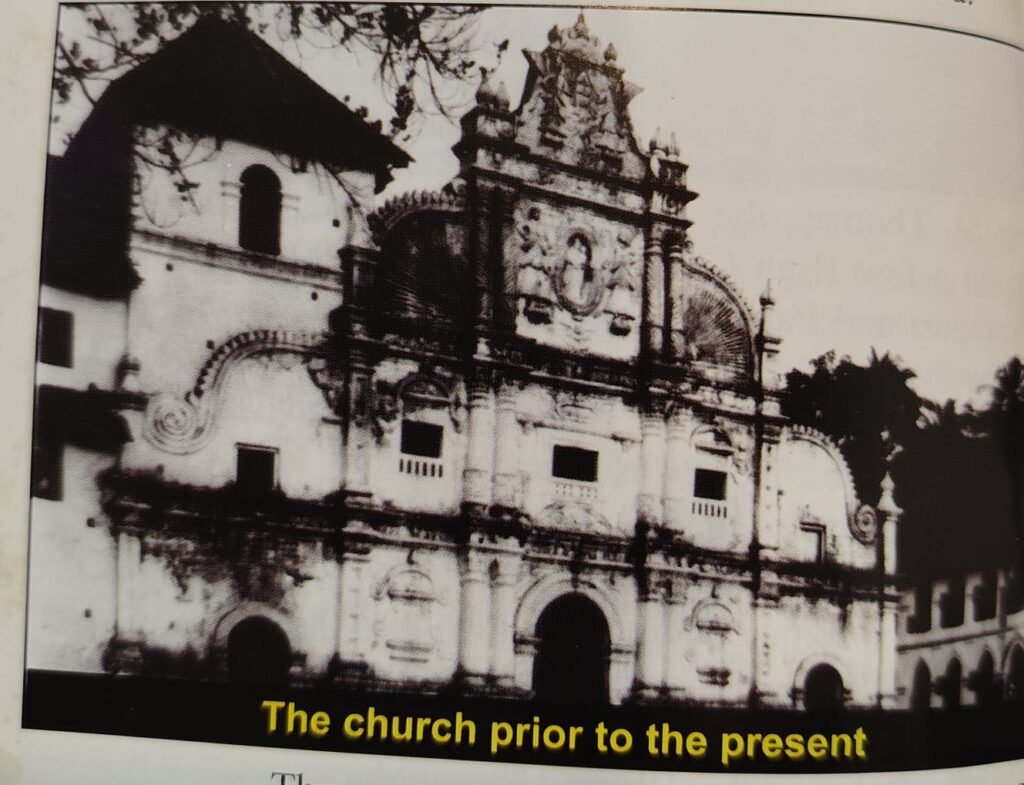
Over successive generations, the priests of the Mulapponpally family continued their steadfast commitment to spiritual service. As the Christian community expanded, the need arose for a dedicated church structure. Despite facing local opposition, the priests resolved to establish a new church, consciously modeled in remembrance of the ancient Kuravilangad Church, where their ancestors were traditionally associated with worship. In keeping with this heritage, a foundation stone from the Kuravilangad Church was ceremonially blessed and brought for the new construction. During this journey, the priests proclaimed the words “Poyinu! Poyinu!” (“Let us go! Let us go!”), a declaration symbolizing faith, unity, and resilience. The journey concluded on a hill situated to the eastern side of the ancestral property, where the foundation stone was laid and the church established. The church, which came to be known as Mulankoot Palli—a name derived from Mulappon Palli reflecting its spiritual origin and ancestral lineage—is, according to oral tradition, believed to have been founded nearly 900 years ago and is identified today as St. Stephen’s Cathedral Church. Traditional narratives, corroborated by historical indications, affirm this continuity. Even today, the ceremonial procession rout from the Mulapponpally region to the Cathedral Church remains in use, serving as a living testament to the enduring devotion and unbroken heritage of the community.
Documentary evidences for early Christian worship in the region
In the early centuries, Christian places of worship in Kerala were frequently described as “pagodas” in Western travelogues and administrative writings. This usage is found in the authoritative work Memoir of the Survey of the Travancore and Cochin States by Benjamin Swain Ward and Peter Eyre Conner (First published-Part 1-1901; Part II-1893 & First reprint- Govt of Kerala, 1994). In their book, they record (pp 134): “Poyecad, about 2 miles south of the Toovaloor, is inhabited by Nairs and Elavers, the houses in compounds dispersed, and a pagoda under a grove of trees on the east; to the west an extensive sheet of wet cultivation, which during the rains is inundated and cultivated as the water subsides.” This description corresponds closely to the site of the present-day Cathedral Church. The geographical features noted—the grove of trees to the east and the broad expanse of paddy fields to the west—accord precisely with the traditional landscape of the locality, leaving little doubt as to the identity of the worship site described. Such references serve as valuable historical testimony to the antiquity of Christian worship in the region and affirm the enduring presence and continuity of
the early Christian community long preceding the construction of later ecclesiastical structures.
Catholic Reunification and the Mulapponpally Contribution
Within the ecclesiastical history of Kerala, the Diocese of Kollam occupies a distinguished position for its leadership in the Catholic Reunification Movement, guided by the Blessed Aloysius Maria Benziger, Bishop of Quilon. Authoritative historical sources, including Fr.Cyril Motha’s biography (pp. 48 & 52) and the memorial volume A Quarter Century of Progress in the Diocese of Quilon 1900–1925 by Fr. Kuttungal Vincent Fernandez (p. 46), record the notable participation of the Mulapponpally family in this movement. These works state: “In 1921, there was a movement towards the Catholic Church in a place called Kudassanad. Fr. Jacob Mulapponpally, along with his family and two other Syrian families, submitted themselves to the Catholic Church.” The two families associated with this act were Thevirathu Kizhakkethil Chacko and Kottuviruthi Vadakkeethil Chacko. Subsequently, upon Bishop Benziger expressing his intention to establish a Catholic church in the region, Rev. Fr. Jacob Mulapponpally donated 50 cents of land to the east of Kudassanad Kavala on behalf of the Latin Diocese of Kollam. He further undertook the construction of a Latin church edifice measuring 90 ft in length and 45 ft in width, thereby laying a firm foundation for the Catholic presence in the area. Following specialized formation in the Chaldean Rite of the Holy Qurbana at the Chethipuzha CMI Ashram, Fr. Jacob Mulapponpally was appointed to minister at the Pazhakulam centre. He ministered extensively across the Adoor and Pathanamthitta regions, making a significant contribution to the growth of the Catholic Reunification Movement. His leadership and service remain deeply acknowledged in the ecclesiastical annals of the Catholic Church in Kerala.
The tradition of Kedavilakku and Sradham
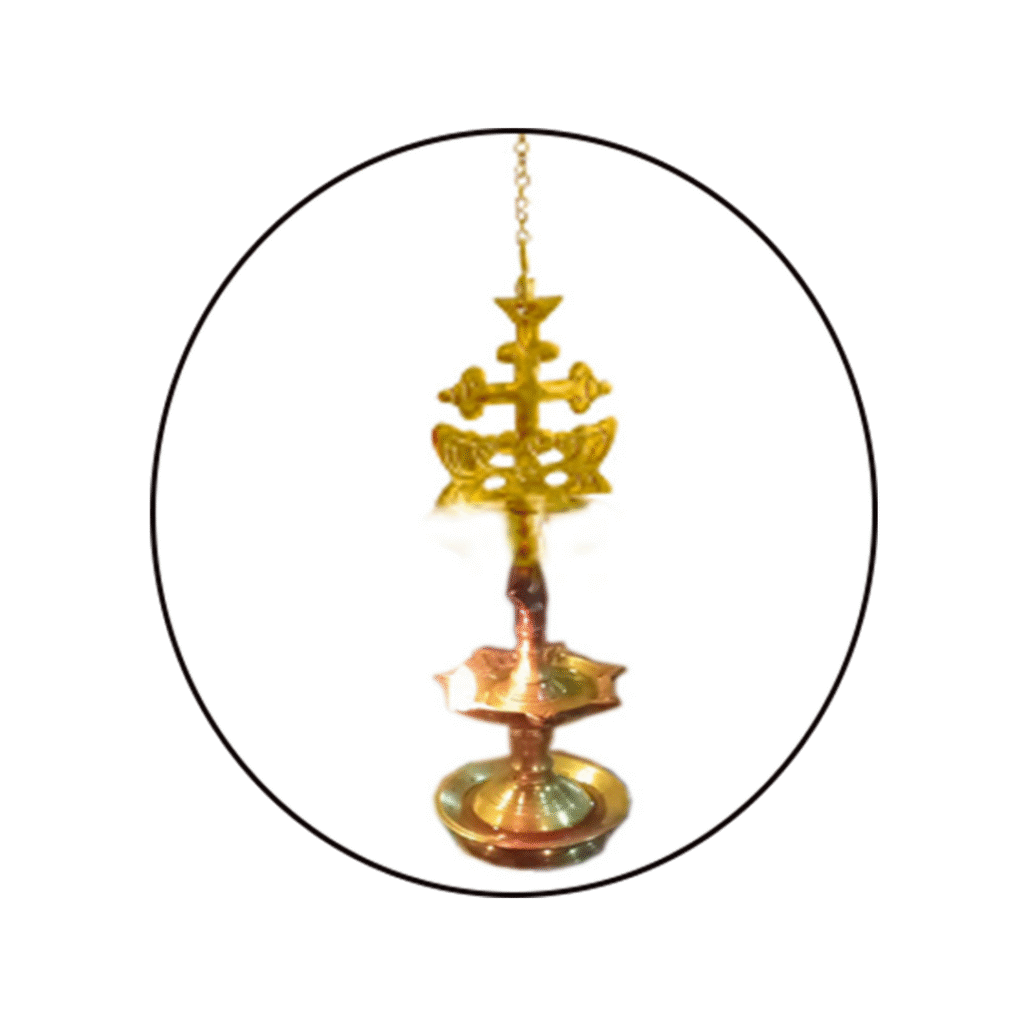
In remembrance of their ancestors and spiritual forefathers, the Kuravilangad Palliveedu family has, from ancient times, observed an annual memorial service (Śrāddham) on 5 November. In continuity with this long-standing tradition, the Mulapponpally family of Kudassanad commemorates the death anniversary (Śrāddham) of the venerable Koshy Tharakan Kathanar, a priestly patriarch believed to have entombed at Thumpamon Church, through a memorial observance and family gathering. Ever since the settlement of Mulapponpalli family the “Kedavilakku” linked with the “Palliveedu” tradition was observed across a few generations after which it gradually fell out of practice. More than half a century ago, in 1983, during the celebration of the Holy Qurbana at the main altar (Madbaha) of Thumpamon Valiyapally, a sacred family lamp (kedavilakku) was lit in memory of the lineage. Kedavilakku refers to a sacred lamp that is kept perpetually alight and is never extinguished. It symbolizes continuity, remembrance, and the enduring presence of faith across generations. This lamp has since been carefully preserved and ceremonially displayed each year in the residence hosting the memorial feast. At the conclusion of the observance, the lamp is reverently entrusted to the next host family, symbolizing the unbroken transmission of spiritual heritage. As successive generations expanded and family branches settled across different regions, the annual memorial and gathering gradually came to be observed in the respective hosts local churches. Each Sradham (Kanni 11) continues to be marked by the Holy Qurbana, prayers, and communal fellowship, thereby sustaining the collective memory of shared ancestry and faith across generations.
Family Pilgrimage to Kuravilangad Church
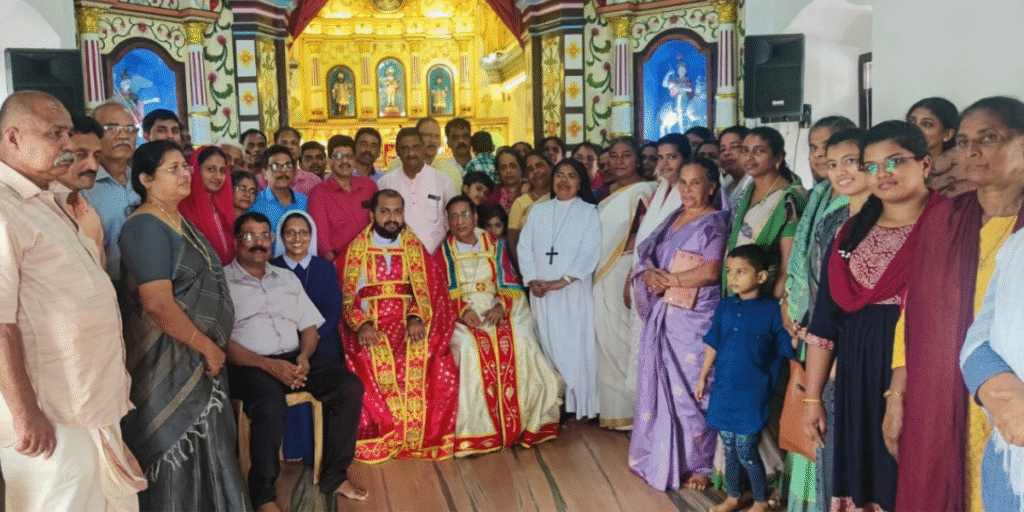
Since the migration of the family’s ancestors, it had been a long-standing tradition for members of the Mulapponpally family to visit the Kuravilangad Martha Mariam Church, their ancestral place of worship; however, over time, this practice gradually fell out of observance. In 2023, the Mulapponpally Family Association reinstituted this tradition of family pilgrimage to the Kuravilangad Martha Mariam Church, historically associated with their forefathers. On this occasion, the family participated in the Holy Qurbana and assembled within the church in an act of thanksgiving, reverently acknowledging their deep ancestral roots linked to this sacred site.This pilgrimage was conceived as a meaningful reaffirmation of the family’s enduring connection to the Palliveedu legacy and the spiritual traditions that have shaped their collective identity. Initiated in 2023, the pilgrimage has since been continued in subsequent years as a regular observance. In 2025, it was associated with the Palliveedu Kudumbayogam held on 5 November, further strengthening its significance within the family’s spiritual and communal life.
Philanthropic Initiatives and Social Commitment of the Mulapponpally Family
Deeply committed to education, social advancement, and the welfare of its members, the Mulapponpally family actively supports several charitable and philanthropic initiatives. These funds are dedicated to the promotion of education, provision of medical assistance, support for persons with disabilities, and relief to families facing financial hardship. Together, these initiatives represent lived expressions of the family’s enduring legacy of service, compassion, and social responsibility. Financial assistance is channelled through the following trusts and endowments:
1. Fr. Koshy Tharakan Memorial Charitable Trust,Mulapponpally(year of establishment: 1994)
2.Thevirathu Kizhakkethil Kunjumman Rahel Memorial Endowment (year of establishment: ___)
3.Thevirathu Kizhakkethil Papachan Memorial Disability Relief Fund (established in2023)
Family Branches and administrative structure
Over the years, the Mulapponpally family has expanded into numerous branches spread across different regions primarily – Kudassanad, Pazhakulam Poozhikkad and Thuvayoor reflecting its demographic growth and geographic dispersion. The branches of the family are:
1. Mulapponpally
2. Thevarethu
3. Kottuviruthi Vadakkel
4. Thattakkattu
5. Mozhattu
6. Thuruthel
7. Venmoni Vadakkel
8. Thekkeveettil
The Mulapponpally Kudumbayogam, since 1994 has maintained a governing committee and an advisory council of elders to oversee the coordination of annual memorials, family gatherings, and prayer meetings, as well as to extend timely assistance to members in need.
The governance structure comprises a President, Vice Presidents, Secretary, Treasurer, Branch Representatives (Committee Members), and Auditors. These office bearers are elected every two years through a democratic process, ensuring the effective conduct of family activities and the continued upholding of the family’s enduring values of unity, charity, and spiritual commitment.
Conclusion
The history of the Mulapponpally family reflects an unbroken continuum of faith, service, and cultural rootedness extending across centuries. Grounded in early Christian traditions and sustained through priestly leadership, and documented historical evidence, the family has preserved its spiritual identity while sustaining continuity amid changing historical and social contexts. Through practices such as the Śrāddham and Kedavilakku, ecclesiastical contributions, charitable initiatives, and organized community life, the Mulapponpally legacy continues to embody values of unity, compassion, and devotion. The collective memory preserved through worship, pilgrimage, and service stands as a living testimony to a heritage that remains deeply relevant and resilient across generations. This brief history titled as “Kedavilakku” (Eternal Lamp) is offered in memory of all the priests, ancestors, and especially
the blessed patriarch Venerable Koshy Tharakan Kathanar. May their intercession and blessings continue to enlighten the family and strengthen its path forward.
An ancient family settled centuries ago. An ancestral home once ruled by priestly lineage heads. Located in the vicinity of Thirumanimangalam Mahadevar Temple. Shared lineage and blessed remembrance marked by observance of Kanni 11 Shradham (Memorial Mass and family gathering). Mulapponpally- a Christian place of worship since its very beginning.